
From emergency communications and fibre-optic networks to security systems and retail technology, low-voltage technicians help keep our world connected.
Have you ever wondered who installs the technology that allows emergency responders to communicate, businesses to process transactions, hospitals to stay connected, or security cameras to protect buildings?
Behind many of these everyday systems are skilled low-voltage technicians.
It’s a career that offers something many people are looking for: variety, hands-on technical work, opportunities to develop specialized skills, and the potential for excellent earnings.
And perhaps the most interesting part? No two workdays have to look alike.
A Career That Takes You Almost Everywhere
Low-voltage technology is much broader than most people realize. These technicians work with the voice, data, video, communications, and security systems that businesses, public institutions, and communities rely on every day.
Consider the variety of work and workplaces available.
Of interest… you don’t need a 4-year electrical apprenticeship to work in this field.
Emergency Services and Public Safety
Imagine working with communications systems supporting police, fire, or ambulance operations. Technicians may help maintain the infrastructure used by dispatch centres, emergency communications departments, and public safety organizations, including organizations such as the RCMP or municipal communications departments.
Reliable communications are essential in these environments, and skilled technical support plays an important role.
Schools, Hospitals, Banks and Commercial Buildings
Walk into almost any modern building and you’ll find technology that depends on properly installed cabling and network infrastructure.
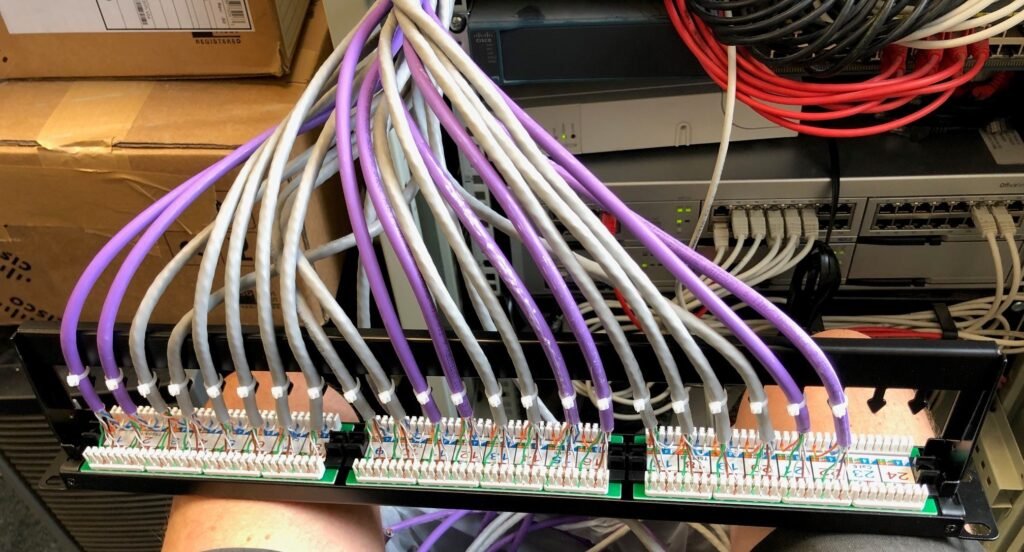
Low-voltage technicians may pull, route, terminate, and test Cat5e, Cat6, coaxial, and fibre-optic cables through walls, ceilings, and designated pathways.
Their work helps connect computers, telephones, communications equipment, and network systems in schools, hospitals, financial institutions, office buildings, and new construction projects.
Retail Stores and Point-of-Sale Technology
Have you ever considered the technology behind a simple purchase at a retail store?
Technicians may install, mount, position, connect, and troubleshoot point-of-sale equipment such as payment terminals, cash drawers, barcode scanners, receipt printers, and label printers.

From large retail chains to smaller businesses, dependable technology helps keep transactions moving.
Fibre-Optic Networks and Outdoor Infrastructure
For those who enjoy working outdoors, fibre-optic network construction offers another direction.
Depending on their role and qualifications, technicians may work with specialized equipment, including fibre-jetting machines, to help install high-speed communications infrastructure in residential developments, commercial properties, and expanding communities.
This work can involve construction sites, underground infrastructure, and large-scale network projects.
Security Cameras and Access Control
Security technology is another important part of the industry.
Technicians may install and service closed-circuit television (CCTV) camera systems, electronic door access controls, card readers, and related security equipment.
These systems are used in commercial buildings, educational institutions, residential developments, and many other facilities.
One Industry. Many Career Paths
One of the greatest attractions of low-voltage technology is the flexibility it offers.
Some technicians specialize in structured cabling. Others work in communications, security, network infrastructure, fibre optics, or technical maintenance.
Some spend much of their time indoors, while others work on outdoor installations. Some work independently, while others are part of a larger installation or technical support team.
The field can appeal to individuals who enjoy troubleshooting, working with their hands, learning new technologies, and seeing the results of their work.
Think about your own day. Whether you’ve used a debit machine, entered a building with electronic security, made a phone call, connected to the internet, or visited a hospital, you’ve probably relied on infrastructure installed or maintained by someone working in this industry.
Low-voltage technology touches almost every part of modern life, even when we don’t notice it.
What Can You Earn as a Low-Voltage Technician?
Depending on experience, specialization, employer, and responsibilities, low-voltage technicians may find positions paying approximately $25 to $45 per hour.
Some employers also provide benefits such as company vehicles and fuel cards, particularly for technicians who travel between job sites.
These figures are illustrative of potential opportunities, not guaranteed wages or benefits. Actual compensation varies by position and employer.
For individuals looking for a technical career with opportunities to develop their expertise, the industry offers several possible directions.
Working in Manitoba? Understand the M Licence
In Manitoba, individuals performing regulated voice, data, and video electrical work must have the appropriate licensing or work under an applicable legal exemption or permitted supervision arrangement.
The relevant provincial credential is the M-V Limited Specialized Trade Electrician’s Licence for Voice, Data and Video, commonly referred to as the M licence.
It is administered by Manitoba’s Inspection and Technical Services (ITS) within the provincial labour department.
Holding the appropriate licence demonstrates that a technician has met provincial requirements for the work authorized under that licence. It can also strengthen professional credibility and support access to positions where employers require licensed technicians.
Licensing is an important part of professional advancement, but it is essential to understand the examination and eligibility requirements.
Thomson Training Solutions Helps You Prepare for the M Licence Examination
The M-V licensing examination requires technical knowledge, an understanding of applicable electrical codes, and familiarity with voice, data, video, and related installation practices.
For experienced technicians, preparing for a formal examination can be challenging—particularly when they have spent years learning through practical experience rather than classroom study.

That’s where Thomson Training Solutions can help.
Based in Manitoba, Thomson Training Solutions provides specialized Voice, Data and Video M Licence Exam Preparation to help eligible individuals strengthen their technical knowledge, understand examination requirements, identify knowledge gaps, and approach the provincial examination with greater confidence.
With more than 3,000 technicians assisted through its training, Thomson Training Solutions understands the challenges faced by people preparing for professional certification and licensing examinations.
Our goal is to help individuals build on their experience, prepare effectively, and take the next step in their careers.
Thomson Training Solutions provides examination preparation. Licensing decisions and examinations are administered by the Province of Manitoba.
Ready to Take the Next Step?
Whether you’re already working in the low-voltage industry and want to obtain your M-V licence, or you’re exploring the many career opportunities available in voice, data, video, and communications technology, Thomson Training Solutions can help you understand your training options.
Contact Thomson Training Solutions to learn more about our M Licence Exam Preparation Course.
Thomson Training Solutions | Winnipeg, Manitoba | 204-254-5024 | https://thomsontrainingsolutions.com/
Our passion is your success!